Monday, 19 August 2013

Nokia Asha 501

General 2G Network GSM 900 / 1800 - RM-899
850 / 1900 - RM-900
GSM 900 / 1800 - SIM 1 & SIM 2 - RM-902
SIM Optional Dual SIM (Micro-SIM, dual stand-by)
Announced 2013, May
Status Available. Released 2013, June
Body Dimensions 99.2 x 58 x 12.1 mm (3.91 x 2.28 x 0.48 in)
Weight 98.2 g (3.46 oz)
Display Type TFT capacitive touchscreen, 256K colors
Size 240 x 320 pixels, 3.0 inches (~133 ppi pixel density)
Multitouch Up to 2 fingers
Sound Alert types Vibration, MP3 ringtones
Loudspeaker Yes
3.5mm jack Yes
Memory Card slot microSD, up to 32 GB, 4 GB card included
Internal 128 MB, 64 MB RAM
Data GPRS Up to 85.6 kbps
EDGE Up to 236.8 kbps
WLAN Wi-Fi 802.11 b/g
Bluetooth Yes, v3.0 with EDR
USB Yes, microUSB v2.0
Camera Primary 3.15 MP, 2048x1536 pixels, check quality
Video Yes,QVGA@15fps
Secondary No
Features OS Nokia Asha software platform 1.0
Sensors Accelerometer, proximity
Messaging SMS(threaded view), MMS, Email, IM
Browser WAP 2.0/xHTML, HTML
Radio FM radio
GPS No
Java Yes, MIDP 2.1
Colors Bright Red, Bright Green, Cyan, Yellow, White and Black
- SNS apps
- MP4/H.263 player
- MP3/WAV/AAC player
- Photo editor
- Organizer
- Voice memo
- Predictive text input
Battery Li-Ion 1200 mAh battery (BL-4U)
Stand-by Up to 1152 h
Talk time Up to 17 h
Music play Up to 56 h
Li-Ion 1200 mAh battery (BL-4U) for dual-SIM model
Stand-by Up to 624 h
Talk time Up to 17 h
Misc SAR US 1.41 W/kg (head)
SAR EU 0.96 W/kg (head)
Price group [About 80 EUR]
Tests Display Contrast ratio: 947 (nominal)
Loudspeaker Voice 73dB / Noise 68dB / Ring 78dB
Camera Photo

Nokia Lumia 928

General 2G Network GSM 850 / 900 / 1800 / 1900
CDMA 800 / 1900
3G Network HSDPA 850 / 900 / 1900 / 2100
CDMA2000 1xEV-DO
4G Network LTE 700 MHz Class 13 / 1700 / 2100
LTE 800 / 900 / 1800 / 2100 / 2600
SIM Micro-SIM
Announced 2013, April
Status Available. Released 2013, May
Body Dimensions 133 x 68.9 x 10.1 mm, 92.8 cc (5.24 x 2.71 x 0.40 in)
Weight 162 g (5.71 oz)
Display Type AMOLED capacitive touchscreen, 16M colors
Size 768 x 1280 pixels, 4.5 inches (~332 ppi pixel density)
Multitouch Yes
Protection Corning Gorilla Glass 2
- PureMotion HD+ ClearBlack display
Sound Alert types Vibration; MP3, WAV ringtones
Loudspeaker Yes
3.5mm jack Yes
- Dolby Headphone sound enhancement
Memory Card slot No
Internal 32 GB, 1 GB RAM
Data GPRS Yes
EDGE Up to 236.8 kbps
Speed EV-DO Rev. A, up to 3.1 Mbps; HSDPA, 42.2 Mbps; HSUPA, 5.76 Mbps; LTE, Cat3, 50 Mbps UL, 100 Mbps DL
WLAN Wi-Fi 802.11 a/b/g/n, dual-band, DLNA, Wi-Fi hotspot
Bluetooth Yes, v3.0 with A2DP, EDR
NFC Yes
USB Yes, microUSB v2.0
Camera Primary 8 MP, 3264 x 2448 pixels, Carl Zeiss optics, optical image stabilization, autofocus, xenon flash
Features 1/3.2'' sensor size, 1.4 µm pixel size, PureView technology, geo-tagging, panorama
Video Yes, 1080p@30fps, video stabilization, stereo sound rec.
Secondary Yes, 1.3 MP, 720p@30fps
Features OS Microsoft Windows Phone 8, upgradeable to WP8 Amber
Chipset Qualcomm MSM8960 Snapdragon
CPU Dual-core 1.5 GHz Krait
GPU Adreno 225
Sensors Accelerometer, gyro, proximity, compass
Messaging SMS (threaded view), MMS, Email, Push Email, IM
Browser HTML5
Radio FM radio
GPS Yes, with A-GPS support and GLONASS
Java No
Colors Black, White
- Wireless charging
- SNS integration
- Active noise cancellation with dedicated mic
- 7GB free SkyDrive storage
- MP3/WAV/eAAC+/WMA player
- MP4/H.264/H.263/WMV player
- Document viewer/editor
- Video/photo editor
- Voice memo/command/dial
- Predictive text input

Network/Bearer and Wireless Connectivity

TAB DATA ONLY
Wi-Fi 802.11a/b/g/n 2.4+5GHz
Wi-Fi Direct available
Bluetooth Profiles: A2DP, AVRCP, HSP, OPP, SPP, HID, PAN
MHL 1.2 support
KIES, KIES Air support

Chipset

Dual Core Application Processor
1.6GHz CPU Speed

Sensors

Accelerometer, Geo-magnetic, Light Sensor available

Connectors

USB v2.0
3.5mm Stereo Earjack
microSD External Memory Slot (up to 64GB)
Micro USB (11pin) available
MHL available

Services and Applications

Samsung Apps available
Readers Hub available (*depends on countries)
Game Hub available
ChatON available
ActiveSync available
B-to-B Compability: ODE, EAS, MDM, VPN, CCX


OS

Android 4.2

Memory

16GB / 32GB Memory

Physical Specification

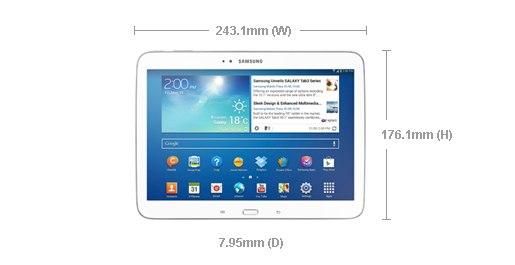
176.1 x 243.1 x 7.95mm Dimension
510g Weight

Battery

6,800mAh Battery
Up to 9h internet usage time
Up to 9h video playback
Up to 140h audio playback

Audio and Video

Video Format: 3gp, wmv, avi, mkv, flv, webm, mp4
Full HD (1080p) Video Playback available
Recording up to 30fps
Audio Format: MP3, AAC, WMA, FLAC, M4A, 3GA, OGG, AMR, WAV, MID, XMF, iMelody, SP-MIDI, RTTTL / RTX, OTA, MP4, 3GP, OGA


Display

TFT Technology
16M colours Depth
10.1" Size
1280 x 800 Resolution

Camera

1.3 Megapixels Camera Resolution (Front)
3 Megapixels Camera Resolution (Rear)

Colour

White

Location

Assisted GPS / GLONASS available

Saturday, 17 August 2013

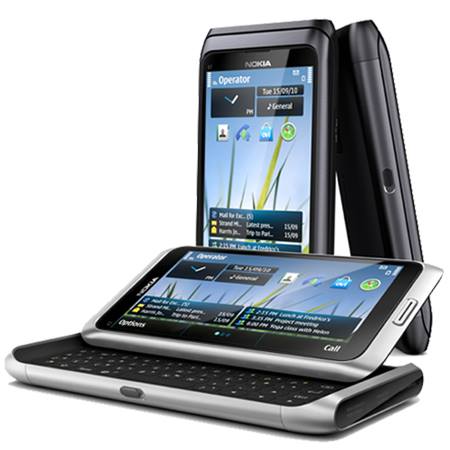
NOKIA E7

NOKIA E7

Introduction

Business as usual for the Eseries is a cliché – thank you very much. But the kind that makes the world feel right. The Nokia E7 could’ve been just another Eseries phone. Oh well, that wasn’t meant to be. The latest is implicitly the greatest but, in the case of the E7, the latest may simply be the last


Symbian is just about to be knocked off the top-spot as the market-leading smartphone platform. Worse yet, while loyal users are still sitting on a fence about replacing their E71/E72s Nokia is deciding whether to euthanize Symbian. Question marks have been hanging over the platform’s approach to touchscreen since day one. And now it’s got WP7 at its very doorstep. It’s the worst of times for the Nokia E7. But it’s up to it to show that the Eseries are still open for business.

Key features

Quad-band GSM/GPRS/EDGE support
Penta-band 3G with 10.2 Mbps HSDPA and 2 Mbps HSUPA
Anodized aluminum unibody
4" 16M-color ClearBlack AMOLED capacitive touchscreen of 640 x 360 pixel resolution
Scratch resistant Gorilla glass display
8 megapixel fixed-focus camera with LED flash
720p video recording @ 25fps
Symbian^3 OS
680 MHz ARM 11 CPU and 256 MB RAM
Wi-Fi 802.11 b/g/n
microHDMI port 720p TV-out functionality
GPS receiver with A-GPS support and free lifetime voice-guided navigation
Digital compass
16GB of on-board storage
Active noise cancellation with a dedicated mic
DivX and XviD video support
Built-in accelerometer and proximity sensor
Standard 3.5 mm audio jack
Stereo FM Radio with RDS, FM transmitter
microUSB port with USB On-the-go
Flash and Java support for the web browser
Stereo Bluetooth 3.0
Good quality audio
Smart and voice dialing
Office document editor preinstalled

GALAXY STAR

GALAXY Star sparkles up your smart life with exceptional performance and Dual SIM usability. Fast processing power enhances all tasking, apps enjoyment and content sharing possibilities.
Great connectivity, large capacity memory and rich Android experiences including Google Now interface.
Incorporates intuitive motion UI and smart multimedia features for the ultimate in easy control and flow, the utmost in everyday pleasure.


The Galaxy Star Boasts the following irresistible features:

- Speedy, powerful CPU provides enhanced computing power for exceptional all-round performance
- Fast connectivity, Wi-Fi access and BT 4.0 enable quick downloading of apps, easy content sharing
- Generous memory (4GB + 512MB RAM) amply accommodates the most vigorous smartphone usage, vast apps and content storage


General Features
OS: Android OS, v4.1.2 (Jelly Bean)
Network: GSM 850 / 900 / 1800 / 1900 -
SIM: Dual SIM
Business Features: Document viewer, Predictive text input, Voice memo/commands, Organizer, SNS integration
Color: Black
Dimensions
Height: 105mm
Width: 58mm
Depth: 11.9mm
Weight: 100.5g
Display
Size: 240 x 320 pixels, 3.0 inches (~133 ppi pixel density)
Type: TFT capacitive touchscreen, 65K colors
Primary Camera: 2 MP, 1600x1200 pixels
Secondary Camera: No
Video Recording: Yes, QVGA@15fps
Battery
Type: Li-Ion 1200 mAh battery
Standby: Up to 320 h
Talk Time: Up to 14 h
Memory
Card Slot: microSD, up to 32 GB
Internal: 4 GB, 512 MB RAM
Audio/Video
Music Formats: MP3/WAV/eAAC+ player
Video Formats: MP4/WMV/H.264 player
Other Features: Image/video editor, Google Search, Maps, Gmail, YouTube, Calendar, Google Talk, Picasa
Connectors
Bluetooth: Yes, v4.0
USB: Yes, microUSB v2.0
Internet
WiFi: Wi-Fi 802.11 b/g/n, Wi-Fi hotspot

Galaxy S4 Zoom Samsung

With the further blurs the line between a phone that thinks it's a camera, and a camera that thinks it's a phone. So which is it?

It's on sale now for around £450.

Design
With its relatively heavy body (208g) and chunky dimensions, not least due to the extendible lens that whirs into action as soon as you activate the camera, the S4 Zoom certainly seems more camera than phone. It won't nestle easily in your pocket and it feels a little odd when you lay it on a table -- place it with the lens down and it seems unbalanced, but lay it screen down and the weight makes it feel vulnerable. With smartphones becoming ever more sleek and svelte, the S4 Zoom looks and feels like a clunky, overweight hybrid that can't quite decide what it wants to be.
Samsung

On one side there's a volume rocker and power/sleep button as well as a large shutter button. On the other is a microSD card slot beneath a plastic cover and a tripod socket sealed with a plastic gromet. There's also a 3.5mm headphone jack, microUSB power/sync port and a large covered slot for the battery. On the front there's a single hard home button beneath the screen, flanked by touch-sensitive back and menu buttons.

More pressing, the screen, and it's a decent one by mid-range phone standards (and this is a mid-range phone -- don't be fooled by the S4 in the name). It's a 4.3-inch Super Amoled model that offers a resolution of 960x540 pixels. That boils down to 256ppi, which may be quite a few steps down from the original S4's 441ppi but it still looks beautifully bright and vibrant, if not quite as pin-sharp as the very best. Still, you won't be disappointed with its rendering of hi-res movies, or the small text on busy web pages.
Samsung

Android, software and performance
It's running the very latest 4.2 version of Android Jelly Bean, so it's up-to-the-minute for updates. On top of that is Samsung's TouchWiz interface, which is packed with distinctive-looking icons and widgets. These include Story Album, which lets you create slideshow photo albums for your homepage, and the Samsung Hub, which gives you access to Samsung's online media content including games, music, films and books.

It features some of Samsung's Smart Screen features too, which uses the device's 1.9-megapixel front-facing camera for Smart stay, which switches off the screen when it detects you haven't looked at it for a while, and Smart rotation, which makes sure the screen aligns itself to the orientation of your face, so if you're reading a page of text in portrait mode and decide to lie down on your side, it won't automatically switch to landscape mode.

The dual-core processor is clocked at 1.5GHz and backed by 1.5GB RAM, which seems pretty good on paper but appears surprisingly sluggish in use. Apps open smoothly but at a more leisurely pace than you'll find even on some other dual-core handsets, let alone the quad-core powerhouses. It recorded an AnTuTu performance benchmark reading of 10,872, which puts it behind some dual-core handsets like the Sony Xperia XP and the HTC One mini, but well ahead of others like the Motorola Razr HD.
Samsung Galaxy S4 Zoom test photo Samsung Galaxy S4 Zoom test photoDave Oliver

Photography
And so to the camera. It has 16 megapixels, autofocus, a bright LED flash and a whopping great 10x optical zoom lens. The physical zoom is powerful and much more effective than the digital zoom you'll find on most camphones. The optical zoom changes the focal length of the lens, allowing you to use the same number of available pixels for a closer shot of your subject without any loss of detail.

Don't miss: Gallery of photos taken on the S4 Zoom

You can use the on-screen zoom controls or the twist ring around the lens to operate the zoom, and sure enough, it's streets ahead of any digital zoom you'll find on a camphone. When you need to get closer to your subject, it's the zoom that really makes the difference, but the extra bulk it adds to the device means you'll need to be sure of using it a lot to make it worth your while.

Automatic focus is welcome though it's perhaps not as quick as you'd expect from a quality camera -- there were many instances when we were faced with a time-sapping red square while the camera struggled to find the range. It always got there in the end, but sometimes it took a while, so you could be taking a chance if you're after quick snaps.

It's packed with extra features too, including touch focus, face and smile detection, optical image stabilisation, HDR and a panorama setting. Picture quality is very good compared to its camphone rivals, with good levels of detail and reliable colour balance, though it starts to struggle a little in comparison with similarly specced dedicated cameras. For instance, there's a tendency towards overexposure on the automatic settings that we could have done without. You can get around it by adjusting the exposure settings but on this type of point and shoot device we'd be much more comfortable letting the camera do the work.

There's only 8GB of memory on board (of which you can use only 5GB) but you can add up to 64GB via microSD card. Chances are you'll need it.

There's a sizeable 2,330mAh battery on board, which comfortably delivered a day and more of fairly heavy use.

Conclusion
Let's be clear, while it has all the power and features of a decent midrange Android smartphone, the S4 Zoom is more of a camera with phone features rather than a phone with enhanced photo ability. It's shaped and weighted like a camera, and isn't very practical for slipping into your pocket.

As a camera however it's pretty good, and several steps ahead of any that you'll find on a phone, with the exception of some in Nokia's Lumia range, notably the 41 megapixel-packing 1020. So think of it as a camera first, but with all the additional media-sharing opportunities that come with a quality smartphone, and for some, that's a beautiful picture indeed.

Samsung Galaxy S4 Mega Samsung Galaxy S4 MegaSamsung

Samsung has so far unveiled a total of five handsets based on its S4 high-ender. The Mega, unsurprisingly, is physically the largest, with an almost tablet-sized screen, but does the rest of the spec match up to its larger than life size?

It's on sale now for around £500.

Design
Style-wise, the Mega looks like an S4 seen through a zoom lens, with its slim, plastic-backed casing and hard home button flanked by touch sensitive back and menu buttons beneath the screen.

At 6.3 inches the screen is an inch bigger than the S4's and a full two inches bigger than the S4 Mini's, but unlike either of those, it's not Amoled, it's "Super Clear" LCD. Its resolution isn't as high as the full HD S4's, though it does manage a resolution of 1,080x720 pixels. On paper, it may not be quite as sharp, the colours may not be quite as vibrant, but the extra size goes a long way to impress, and it's still extremely bright and clear -- a joy to watch movies or play games on.
Samsung Galaxy S4 Mega Samsung Galaxy S4 MegaSamsung

Nice to see that the extra screen acreage means you get a more complete onscreen keyboard, with all the numbers and more symbols available without having to click onto an alternative keyboard layout.

Android, software and performance
The Mega has the same 1.7GHz processor backed by 1.5GB RAM as the S4 Mini, but with the larger, higher-res screen that engine has a lot more to do. It's not slow exactly, but despite a perfectly respectable AnTutu benchmark rating of 14,083 it operates at a noticeably more relaxed pace than any of the other phones in the S4 family that we've seen. Apps hesitate for a fraction before opening and busy web pages take a fraction longer to load, though HD games don't appear to suffer any gameplay issues.


The Mega is running the very latest 4.2.2 Jelly Bean version of Android, so it feels bang up to date. It also has Samsung's TouchWiz interface, a movable feast depending on which handset you're using, but which always offers a distinctive appearance and unique set of widgets.

It's shed some of the smart screen gimmicks from the S4, like Smart Scroll, which uses the front-facing camera to monitor your peepers and automatically scroll through a page of text without having to swipe. It's retained Smart stay though, which uses the same technology to check if you're still looking at the screen and allow it to stay on even if you've set an automatic time-out. It also has Palm motion, which offers a few extra hand gesture controls, such as taking a screen shot by swiping your hand across the display.
Samsung Galaxy S4 Mega test photo Samsung Galaxy S4 Mega test photoDave Oliver


The rear camera is the same as the one on the S4 mini -- eight megapixels and a good range of Samsung photo features, plus pretty good photo quality overall.

It's a truth universally acknowledged that a big screen needs a big battery and fortunately the Mega comes with a hefty 3,200mAh model that managed to keep it running for a little over a day of heavy use.

Conclusion
It's bigger than the S4, and comes with a lower spec. It's also a little bigger but not as versatile as the Galaxy Note 2 and doesn't have that capable phone's stylus, so the Mega is a device that's too big to be a standard phone and not quite big enough to pass muster as a tablet. It's a solution in search of a problem and while it does everything it's supposed to passably well, it remains to be seen just who would want it.